DigiTech Ventura Vibe Manual: A Comprehensive Guide
This guide provides detailed information on the DigiTech Ventura Vibe, covering setup, operation, troubleshooting, and advanced techniques for optimal performance.
Welcome to the world of swirling, psychedelic soundscapes! The DigiTech Ventura Vibe is a versatile stereo vibrato and rotary pedal designed to add depth and movement to your guitar signal. This manual serves as your comprehensive resource for unlocking the full potential of this exceptional effect. Whether you’re a seasoned guitarist or just starting your sonic journey, the Ventura Vibe offers a captivating range of textures, from subtle shimmering choruses to dramatic, rotating speaker simulations.
Inspired by classic vibe and Leslie speaker effects, the Ventura Vibe combines vintage tones with modern convenience. It’s a powerful tool for creating unique and inspiring sounds, suitable for a wide variety of musical genres. This guide will walk you through every aspect of the pedal, ensuring you can quickly and easily integrate it into your rig and achieve the sounds you desire.
What is the Ventura Vibe?
The DigiTech Ventura Vibe is a stereo vibrato and rotary pedal that emulates the iconic sounds of vintage vibe and rotating speaker cabinets. It’s designed to add swirling, pulsating, and immersive textures to your guitar, bass, or other instruments. Unlike simple chorus or tremolo effects, the Ventura Vibe delivers a more complex and dynamic modulation, capturing the organic feel of classic analog circuits.
This pedal effectively combines the character of the Dunlop Uni-Vibe with the sonic qualities of a Leslie speaker, offering two distinct modes for versatile sound creation. It’s a compact and robust unit, perfect for both studio recording and live performance. The Ventura Vibe allows musicians to easily access a wide palette of expressive sounds, enhancing their creativity and performance.
Key Features and Specifications
The DigiTech Ventura Vibe boasts several key features, including authentic vibe and rotary speaker simulations, offering a diverse range of modulation effects. It features true bypass switching to preserve your instrument’s original signal when the pedal is disengaged. Stereo input and output connections provide expansive soundscapes and immersive experiences.
Specifications include Rate and Depth controls for shaping the modulation, a Mix control for blending the effect with the dry signal, and a Mode selector for choosing between Vibe and Rotary modes. It operates on a 9V DC power supply (not included) and features a rugged metal construction for durability. The pedal’s compact size makes it ideal for pedalboards, and its intuitive controls allow for quick and easy adjustments.
Understanding the Pedal’s Controls
The DigiTech Ventura Vibe’s functionality centers around its intuitive control scheme, allowing users to sculpt a wide array of vibrato and rotary effects. Mastering these controls unlocks the pedal’s full potential. The Rate knob dictates the speed of the modulation, from slow, subtle undulations to fast, swirling textures. Depth controls the intensity of the effect, influencing how pronounced the modulation becomes.
The Mix control blends the wet (effected) signal with the dry (original) signal, offering a balance between subtle enhancement and dramatic transformation. Finally, the Mode selector switches between the Classic Vibe and Rotary Speaker Simulation modes, each providing a distinct sonic character. Experimentation with these controls is key to discovering the Ventura Vibe’s versatility.
Knobs and Switches Explained
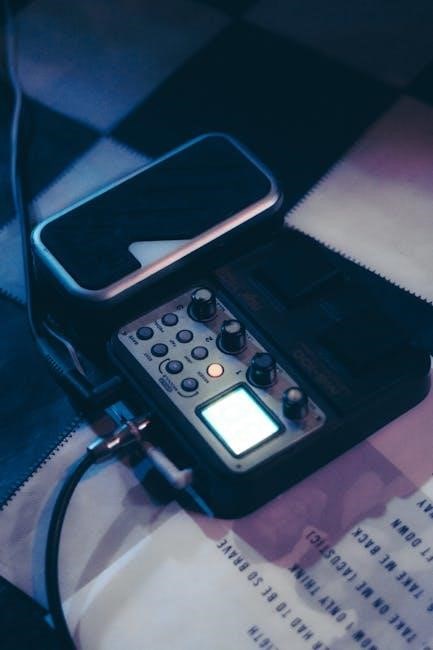
The Ventura Vibe features a straightforward layout of knobs and a single mode switch for easy manipulation. The Rate knob adjusts the speed of the vibrato or rotary effect, ranging from a gentle pulse to a rapid swirl. Depth controls the intensity, determining how much the signal is modulated – subtle shimmer or dramatic wobble. The Mix knob blends the dry and wet signals, allowing for a balanced or heavily effected sound.
The Mode Selection switch toggles between Vibe, emulating a classic Univibe, and Rotary, simulating a spinning Leslie speaker. These controls work in harmony, offering a broad palette of sonic textures. Understanding their interplay is crucial for achieving desired tones.
Rate Control
The Rate control on the DigiTech Ventura Vibe dictates the speed of the modulation effect, whether in Vibe or Rotary mode. Turning the Rate knob clockwise increases the speed, creating a faster, more pronounced swirling or pulsing effect. Conversely, rotating it counter-clockwise slows down the modulation, resulting in a subtle, gentle movement.
Experimentation with the Rate control is key to finding the sweet spot for different musical styles. Faster rates are ideal for psychedelic textures and dramatic swells, while slower rates provide a more nuanced, ambient feel. It interacts dynamically with the Depth control, influencing the overall character of the sound.
Depth Control
The Depth control on the DigiTech Ventura Vibe determines the intensity of the modulation effect, influencing how dramatically the signal is affected by the chosen Rate and Mode. Increasing the Depth adds more pronounced swells and undulations to the sound, creating a more immersive and swirling experience. Lowering the Depth results in a more subtle and restrained modulation.
This control works in tandem with the Rate knob; a higher Depth setting amplifies the effect of faster Rate speeds, while a lower Depth softens the impact of quicker modulation. Finding the right balance between Rate and Depth is crucial for tailoring the Vibe or Rotary effect to your specific sonic needs and musical context.
Mix Control
The Mix control on the DigiTech Ventura Vibe blends the dry, unaffected signal with the wet, modulated signal, offering precise control over the effect’s prominence in your overall sound. Turning the Mix knob clockwise increases the level of the vibrato or rotary effect, making it more noticeable and dominant. Conversely, rotating it counter-clockwise reduces the wet signal, allowing more of your original guitar tone to pass through.
This control is essential for achieving a natural and balanced sound. A subtle mix setting can add a gentle shimmer, while a higher setting delivers a more dramatic and swirling effect. Experimenting with the Mix control allows you to integrate the Ventura Vibe seamlessly into your existing signal chain.
Mode Selection (Vibe & Rotary)
The DigiTech Ventura Vibe offers two distinct modes: Vibe and Rotary, each emulating a classic sound. The Vibe mode replicates the swirling, pulsating effect of vintage Univibe pedals, delivering a warm and organic modulation. This mode is ideal for adding subtle movement or creating psychedelic textures.
Switching to Rotary mode simulates the sound of a rotating Leslie speaker, famous for its lush and complex character. This mode provides a wider, more spacious sound, perfect for adding depth and dimension to your guitar. The selection switch allows instant toggling between these two iconic effects, offering versatility for various musical styles and sonic palettes.
Powering the Ventura Vibe
The DigiTech Ventura Vibe requires a 9V DC power supply with a center-negative polarity. It’s crucial to use a regulated power supply to ensure stable operation and prevent unwanted noise. The pedal consumes approximately 100mA, so any standard 9V adapter capable of delivering at least that amount will suffice.
Avoid using batteries for extended periods, as they may not provide consistent power. The DC power jack is located on the back panel of the pedal. Incorrect polarity can damage the unit, so double-check before connecting. Using an isolated power supply is recommended to minimize hum and interference within your signal chain, ensuring a clean and pristine sound.

Input and Output Connections
The Ventura Vibe features standard ¼-inch input and output jacks, located on the rear panel. The Input jack accepts the signal from your guitar or other instrument, while the two Output jacks provide both a mono and a stereo output. Connecting to both outputs delivers the full stereo vibrato/rotary effect.
For mono operation, use only the Mono Output jack. When utilizing the stereo outputs, connect the Mono Output to the left channel of your amplifier or interface and the Stereo Output to the right channel. Proper cable connections are vital for optimal signal transfer and noise reduction. Ensure all cables are securely plugged in to avoid signal dropouts or unwanted interference.
Mono vs. Stereo Operation
The DigiTech Ventura Vibe excels in both mono and stereo configurations, offering versatile sonic possibilities. In mono, the pedal processes the signal and outputs a single channel, ideal for simpler setups or amplifiers without stereo capabilities. For a truly immersive experience, stereo operation is recommended.
Stereo operation utilizes both output jacks, creating a wider, more dynamic soundscape. Connect the Mono Output to the left channel and the Stereo Output to the right channel of your amplifier or audio interface. This separation enhances the swirling vibrato and rotating speaker simulations, providing a realistic and captivating effect. Experiment with panning to further refine the stereo image and achieve your desired sound.
Using the Ventura Vibe in Your Signal Chain
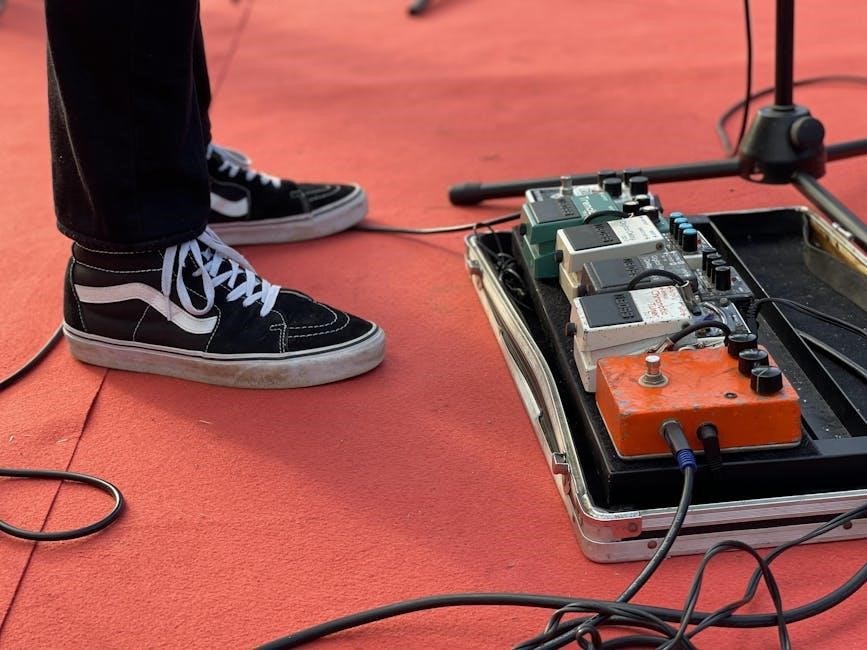
Optimal placement of the DigiTech Ventura Vibe within your effects signal chain significantly impacts its sound. Generally, it’s recommended to position the Ventura Vibe towards the end of your chain, after essential gain stages like overdrive, distortion, and fuzz. This ensures the vibe and rotary effects are applied to a fully shaped tone, preserving clarity and preventing unwanted muddiness.
However, experimentation is key! Placing it before modulation effects like chorus or flanger can create unique textures. Avoid placing it directly after high-gain pedals, as this might result in a washed-out sound. Consider your desired outcome and adjust accordingly. Remember, the Ventura Vibe shines when it’s the final touch, adding movement and depth to your guitar signal.
Troubleshooting Common Issues
If the Ventura Vibe isn’t producing sound, first check the power supply and input/output connections. Ensure the pedal is receiving adequate power and that cables are securely plugged in. A common issue is a faulty cable or power adapter. If the effect sounds weak or distorted, try a different input signal or adjust the Mix control.
For unusual noises, verify that your guitar’s output impedance is compatible. If the pedal is unresponsive, a firmware update might resolve the problem – check DigiTech’s support website. If issues persist, consult the official manual or contact DigiTech support for assistance. Remember to systematically eliminate potential causes before seeking further help.
Understanding the Different Modes
The Ventura Vibe offers two distinct modes: Classic Vibe and Rotary Speaker Simulation. Classic Vibe replicates the iconic swirling effect of vintage vibrato pedals, delivering a warm, pulsating tone ideal for psychedelic and retro sounds. This mode excels at adding subtle movement or dramatic, seasick modulation to your guitar.
Rotary Speaker Simulation, conversely, emulates the complex sound of a rotating Leslie speaker cabinet. It provides a rich, spacious effect, perfect for organ-like tones and adding depth to clean guitar sounds. Experiment with both modes to discover the unique character each brings to your playing, tailoring the vibe to your musical style.
Classic Vibe Mode
Classic Vibe mode faithfully recreates the sound of vintage vibrato effects, reminiscent of the Dunlop Uni-Vibe. This mode delivers a swirling, pulsating modulation that adds depth and character to your guitar signal. It’s perfect for achieving those classic psychedelic tones favored in the 60s and 70s.
Utilize the Rate and Depth controls to sculpt the intensity and speed of the effect. Lower Rate settings create subtle, undulating movement, while higher settings produce a more pronounced, dramatic swirl. Depth adjusts the overall intensity of the modulation. Experiment with these controls to find the sweet spot for your desired sound, from gentle shimmer to intense, seasick wobble.
Rotary Speaker Simulation Mode
Rotary Speaker Simulation mode emulates the iconic sound of a rotating Leslie speaker cabinet. This mode delivers a complex, swirling modulation that mimics the Doppler effect created by the rotating horns and drums within a Leslie. It’s ideal for adding a vintage, organ-like texture to guitars, keyboards, or any instrument.
The Rate control in this mode adjusts the speed of the simulated rotor, while Depth controls the intensity of the effect. Experiment with these settings to achieve a realistic Leslie speaker sound, from slow, subtle rotation to fast, dramatic swirling. This mode excels at creating lush, atmospheric textures and adding a dynamic, three-dimensional quality to your sound.
DigiTech Ventura Vibe: Advanced Techniques
Explore expressive control by utilizing an external expression pedal connected to the Ventura Vibe. Assigning the expression pedal to Rate, Depth, or Mix allows for real-time manipulation of the effect’s parameters, adding dynamic swells and textures to your playing. Combine the Vibe and Rotary modes for unique layered effects – subtly blend them for a complex modulation or dramatically switch between them for contrasting sounds.
Experiment with placement within your signal chain; positioning the Ventura Vibe after distortion can create a more pronounced and swirling effect. Utilize stereo operation to widen the sonic image and enhance the spatial depth of the vibe and rotary sounds.
Presets and Saving Settings (If Applicable)
Unfortunately, the DigiTech Ventura Vibe does not feature onboard preset saving capabilities. This means users must manually record their desired knob and switch settings for later recall. A helpful technique is to photograph the pedal’s control panel with a smartphone, clearly displaying the positions of Rate, Depth, Mix, and Mode selection.
Alternatively, create a written log detailing each setting combination. For gigging musicians, labeling each patch with a specific song or tonal context is highly recommended. While lacking presets, the pedal’s intuitive controls allow for quick adjustments between sounds during live performance, fostering creative exploration.
Firmware Updates and Support
Currently, the DigiTech Ventura Vibe does not support firmware updates. Unlike some modern pedals, there’s no USB connectivity or software interface for modifying the pedal’s internal programming. This simplifies ownership, eliminating the need for regular updates or potential compatibility issues. However, it also means any future feature enhancements or bug fixes will require a new hardware revision.
For support, DigiTech provides comprehensive resources on their official website, including the downloadable owner’s manual and FAQs. Users can also access their support forums for community assistance and troubleshooting tips. Direct support inquiries can be submitted through the DigiTech website’s contact form.
DigiTech Support Resources
DigiTech offers a variety of resources to assist Ventura Vibe owners. The primary source is their official website, hosting a dedicated support section with downloadable manuals – including the Ventura Vibe Owners Manual (5064622-A, 2015 Harman) – and frequently asked questions addressing common issues.
Beyond the documentation, DigiTech maintains active support forums where users can connect, share experiences, and seek advice from fellow musicians and, occasionally, DigiTech staff. For more personalized assistance, a contact form is available on their website allowing direct communication with the support team. Additionally, exploring online guitar communities and forums often yields helpful tips and troubleshooting solutions from experienced Ventura Vibe users.
Comparing the Ventura Vibe to Similar Pedals
The DigiTech Ventura Vibe distinguishes itself by combining classic vibrato and rotary speaker simulations in a single unit. Compared to the Dunlop Uni-Vibe, a benchmark for vibrato, the Ventura Vibe offers added rotary modes, expanding its sonic palette.
Unlike dedicated rotary speaker emulators, the Ventura Vibe provides both effects, offering versatility for various musical styles. While some multi-effects pedals include similar functionalities, the Ventura Vibe’s focused design and dedicated controls provide a more intuitive and streamlined user experience. User reviews frequently highlight its affordability and quality, positioning it as a strong contender against higher-priced alternatives offering comparable features and tones.
Ventura Vibe: User Reviews and Community Feedback
Online communities consistently praise the DigiTech Ventura Vibe for its authentic vibrato and convincing rotary speaker simulations. Many users “LOVE the Ventura Vibe!!” and recommend purchasing one if encountered, highlighting its exceptional value. Feedback emphasizes its ease of use, particularly the intuitive controls for shaping the effect’s character.
Several guitarists appreciate its placement flexibility within the signal chain, recommending it as a final effect for optimal impact. Discussions often compare it favorably to vintage Uni-Vibes and Leslie speakers, noting its ability to recreate those classic tones. Positive comments also focus on its build quality and reliability, making it a dependable addition to any pedalboard.
Where to Download the Official Manual (PDF)
The official DigiTech Ventura Vibe Owners Manual is readily available for free PDF download from multiple sources. You can directly access the manual, identified as document number 5064622-A (dated 2015), through various online repositories specializing in user manuals and guides.
DigiTech’s official website provides a dedicated section for product manuals, including the Ventura Vibe. Additionally, websites archiving user manuals offer convenient access. Searching for “DigiTech Ventura Vibe owners manual pdf” will yield numerous results. These resources ensure users have immediate access to comprehensive documentation, covering all aspects of the pedal’s operation and troubleshooting.